Waiting rooms combine limited movement, unclear timing, and very little control. A useful activity does not need to hold a child's attention for an hour. It only needs to make the next few minutes easier.
Start one activity before restlessness builds. Keep the directions short, then let the child decide how much detail to add.
For toddlers ages 1 to 3
- Point and name: ask your child to find a chair, light, door, clock, and bag.
- Family photo cards: show two or three photos and ask simple questions such as, “Where is Grandpa's hat?”
- Color finder: choose one color and find three nearby objects that match it.
- Quiet copycat: tap a short rhythm on your knee, then invite your child to copy it.
For preschoolers ages 3 to 5
- Waiting-room I Spy: use only objects your child can see without leaving the seat.
- Finish the shape: draw a circle or zigzag and let your child turn it into a picture.
- What happens next? take turns adding one sentence to a tiny story about the room.
- Helper hunt: find signs, doors, uniforms, or tools that help the office work.
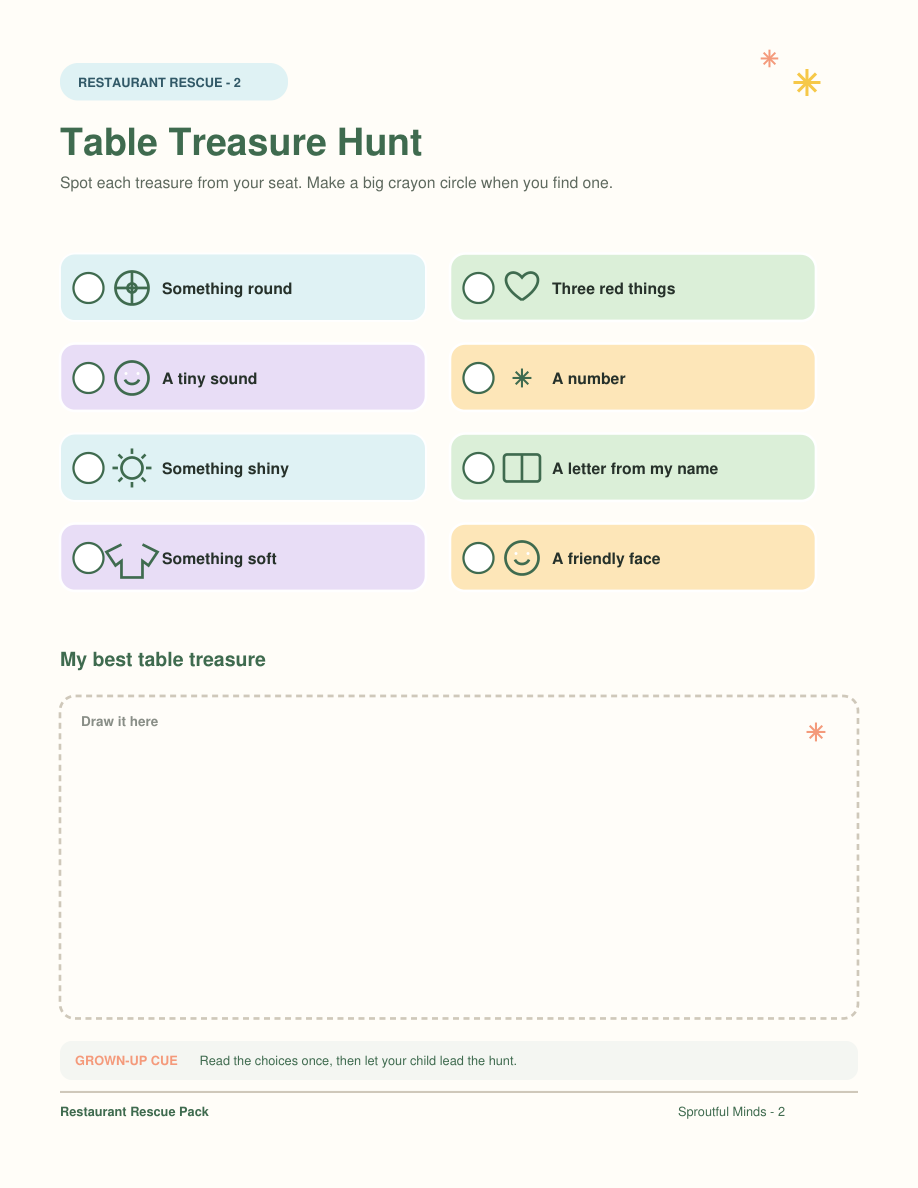
A ready-to-pack option
Keep four quiet pages in the appointment bag.
Restaurant Rescue was designed for tables, but its pencil-first treasure hunt, drawing, and storytelling pages also work during appointments and long lines. The preview is the real worksheet.
For kids ages 6 to 9
- Room map: sketch the chairs, doors, desk, and walking path from above.
- Alphabet hunt: look for each letter in signs, forms, posters, and labels.
- One-word story: take turns adding one word until the story reaches a funny ending.
- Design a waiting machine: draw a machine that makes waiting easier, then label three parts.
Pack less, then repeat the routine
Two folded activity pages, a few crayons or short pencils, stickers, and one quiet comfort item are enough. Offer two choices instead of showing the whole bag: “Do you want the picture hunt or the room map?”
Why these activities are here
These ideas were selected because they are quiet, compact, easy to explain, and adjustable by age. ZERO TO THREE includes picture games and other simple activities for waits at restaurants or doctor's offices. Harvard's Center on the Developing Child also provides age-based games that practice attention, working memory, and self-control. See ZERO TO THREE's play activities for ages 24 to 36 months and the Harvard activity guide.
FAQ
What can children do in a waiting room without screens?
Try a color hunt, picture-card game, quiet copycat rhythm, drawing prompt, one-word story, or room map. Choose one before the wait becomes difficult.
What should I pack?
Two folded activity pages, a few crayons or short pencils, stickers, and one quiet comfort item make a compact reusable kit.
What works for a toddler?
Point-and-name games, family photo cards, color finding, and short copycat rhythms take only a few seconds to explain.